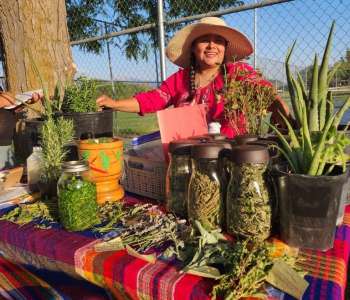

Wasatch Community Gardens’ Advocacy & Justice Program was established to advance our commitment to an equitable, inclusive, and just food system that serves the unique needs of our diverse community. Since 1989, we have adapted and expanded our offerings—from bilingual programs in Title I schools to discounted workshops—guided by our community and our mission to make gardening and food security accessible to all.
A Brief History
The Advocacy & Justice Program at Wasatch Community Gardens was born from a collective call for greater equity, inclusivity, and social justice in our community work. While these elements have always been at the core of WCG’s values, we recognized that we needed to prioritize them in our decision-making, our communication, and our programming in order to have real impact. Our staff have long been committed to this work, but we cannot do it alone or within a bubble of our own experience, comfort, and understanding.
Developed in response to staff and community feedback, we envisioned the Advocacy & Justice Program to act as an internal support for our teams and departments as we address the organization’s strategic priorities through focused advocacy and action. Dedicating a program to specifically support our READI (Race, Equity, Access, Diversity, Inclusion) work expands our team’s capacity to make meaningful changes while also continuing to fulfill our ongoing contract and partnership obligations with community members.
The Advocacy & Justice Program launched in 2024 with a new director and an abundance of excitement and energy. Throughout the year, the program guided and contributed to significant improvements in accessibility and how we communicate and incorporate both physical and financial access in our offerings. Our director participated in trainings, mentor relationships, and community feedback gathering while supporting our staff/Board READI (Race, Equity, Accessibility, Diversity, Inclusion) Committee.
When the director role became vacant at the beginning of 2025, we took a pause before rehiring to take everything we’ve learned and further develop the program’s direction and purpose. This has resulted in a three-phase structure that will guide the next 1-3 years of the program:
Phase 1: Building Internal Understanding
This stage is solely focused on understanding the historical evolution and current status of the organization when it comes to READI within our operations, offerings, and community-based work. This includes auditing our sites and programming with a READI lens, working with the READI Committee to understand our strategic goals and alignment with our mission, and document success and challenges. We cannot move forward without first understanding where we’ve been.
Phase 2: Co-Strategizing Impactful Adjustments
This phase is focused on working with staff and the READI Committee internally to further our strategic goals and make adjustments to current operations and offerings that will have a positive impact toward greater accessibility, equity, and food justice. Externally, Phase 2 also includes a comprehensive community engagement initiative that will identify pathways to engaging with WCG, enhance community-driven engagement, and increase exposure of accessible, low-barrier, and emotionally safe entry points into WCG.
Phase 3: Implementing & Adjusting Strategies
Internally, this phase involves implementation of evaluation methods to gauge our progress toward strategic goals, co-creating a cadence of professional development training to support our staff’s continued learning, and continuing to support adjustments to programming and/or operations. Externally, Phase 3 entails implementing an integrated engagement strategy that sustains ongoing community touchpoints while exploring policy and community partner engagement to advance WCG’s goals and mission. This engagement will be centered around food justice, climate change, land access, coalition-building, community ownership and power, cultural identity, relational trust, etc.