

To join the waitlist for a garden plot, please fill out a garden plot application through the link below. Garden plots are assigned in order of application date. Fee reductions covering 50% of plot fee may be available, on the basis of need and available funding.
Community Garden Map
Frequently Asked Questions About Community Gardens
What does Wasatch Community Gardens provide?
Wasatch Community Gardens provides irrigation and tools to support gardeners throughout the growing season. Our Garden Managers also support community building through developing community gathering spaces, gardener-led projects, and leading gardeners in stewardship of the space and resources provided at each space. Gardeners are responsible for providing seeds and plant starts, although there are often opportunities for free resources for participation in WCG education programs like workshops or the Trial Blazers.
How to build community in a community garden?
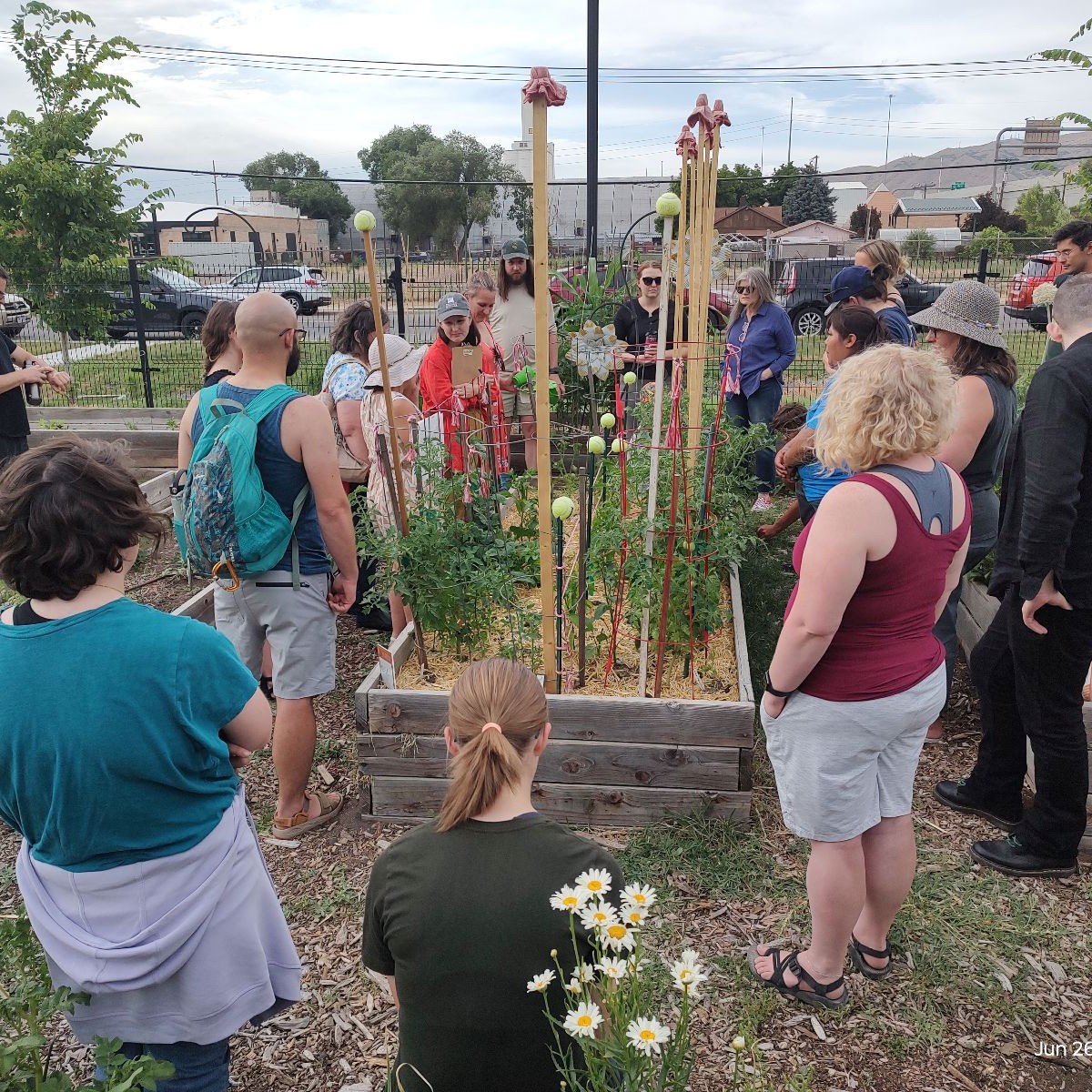
A community garden is a shared space. Gardeners not only take care of their own individual rental plots, they also attend a spring orientation meeting, participate in garden decisions, and work together on a variety of garden service tasks, such as weeding common areas, handling irrigation maintenance, monitoring for pests, and leading special garden improvement projects. While our program managers coordinate these overall operations, they depend heavily on gardener involvement. It really takes a community to grow a garden!
We provide opportunities for community members who are not a member of a garden to participate with us through our public pick, which are garden plots planted outside or on the fenceline which can be harvested from by anyone! We also encourage gardeners to share their abundance by placing produce in the produce box on the front of each garden to share with passers-by.
Other ways to be involved in a community garden include attending workshops or classes, supporting community garden murals, and signing up for the waitlist if you are interested in gardening in the future!
- Public Pick
- Theft mitigation
- Sharing the harvest
- Community plots
- Gardens are public spaces
- Building community
What are the rules?
With more than 30 years of experience, Wasatch Community Gardens understands what it takes to get a large group of people to work together successfully. Please familiarize yourself with our Garden Policies, as they contain specific requirements and restrictions, which you will be held accountable for if you violate. For example, all our gardens are organic, and the use of synthetic fertilizers, pesticides, and herbicides is not allowed. With these shared expectations, our garden policies promote a smooth garden operation where everyone can succeed.
Wasatch Community Gardens strives to be an anti-racist organization. To learn more about our commitment, please visit our Anti-Racism Statement.
How much time does it take?
A community garden plot is a commitment of time and constant effort for over six months out of the year. The more time and attention you invest in your rental plot, the greater the likely outcome. On average, you will spend 4 - 8 hours per week tending to their plot, completing service hours, attending garden events, and preparing their harvested food.
What are the challenges?
Cold snaps, hail, pests and diseases are common frustrations for gardeners, but there may be additional challenges when you grow food in a public space such as a community garden. Theft and pests can be challenges when gardening in shared, public spaces. The most successful community gardeners adapt their growing practices to mitigate produce theft. Growing prolific varieties, visiting the garden frequently to harvest ripe produce, and coordinating with neighboring gardeners to harvest or address pest issues collectively are all methods to tackle the challenges of growing food in a public space.
Additionally, while our community gardens are all watered with an automatic drip system, you are responsible for understanding how to plant successfully with drip irrigation, which will include hand watering seedlings/seeds until they are established.
While a community garden can provide great advantages, we cannot guarantee the health of your plants or the bounty of your harvest. However, you are surrounded by folks who are happy to share their best practices and experience!
What are the benefits and rewards?
Despite the extra responsibilities and challenges, community gardening can be extremely rewarding! You can look forward to harvesting fresh fruits and veggies, making new friends, and learning new gardening skills, while also connecting with nature and cultivating a thriving green space in your neighborhood. Additionally, we offer informative workshops on many organic gardening topics, and may offer additional resources that can save you time and money, such as seeds, transplants, tools, and more.
Are there other resources that I should be aware of?
What responsibilities will I have?
Community gardeners contribute to the maintenance and upkeep of amenities and infrastructure within the space. They are also key to building community through events, mentorship, and service. WCG has developed descriptions of each service role within a community garden space that helps our gardens, facilities, and members to flourish.